Home / Financial Literacy Classes

The Education
They Never Gave You.

Schools taught you history and algebra. They never taught you how a mortgage works, what compound interest does to your debt, how taxes erode your retirement, or what the three buckets of money are. That wasn't an accident - and this is the correction. Online. At your own pace. Built for real people with real lives.

Why These Classes Exist

Finances Can Be Confusing. Without a Model, Freedom Cannot Happen.

Think about how most people make financial decisions. They buy insurance because a friend sold it to them. They open the 401(k) their employer offered without understanding how it works. They take on debt because it was convenient. They save what's left over - which is usually nothing. That's not a financial plan. That's financial chaos with a direct deposit.

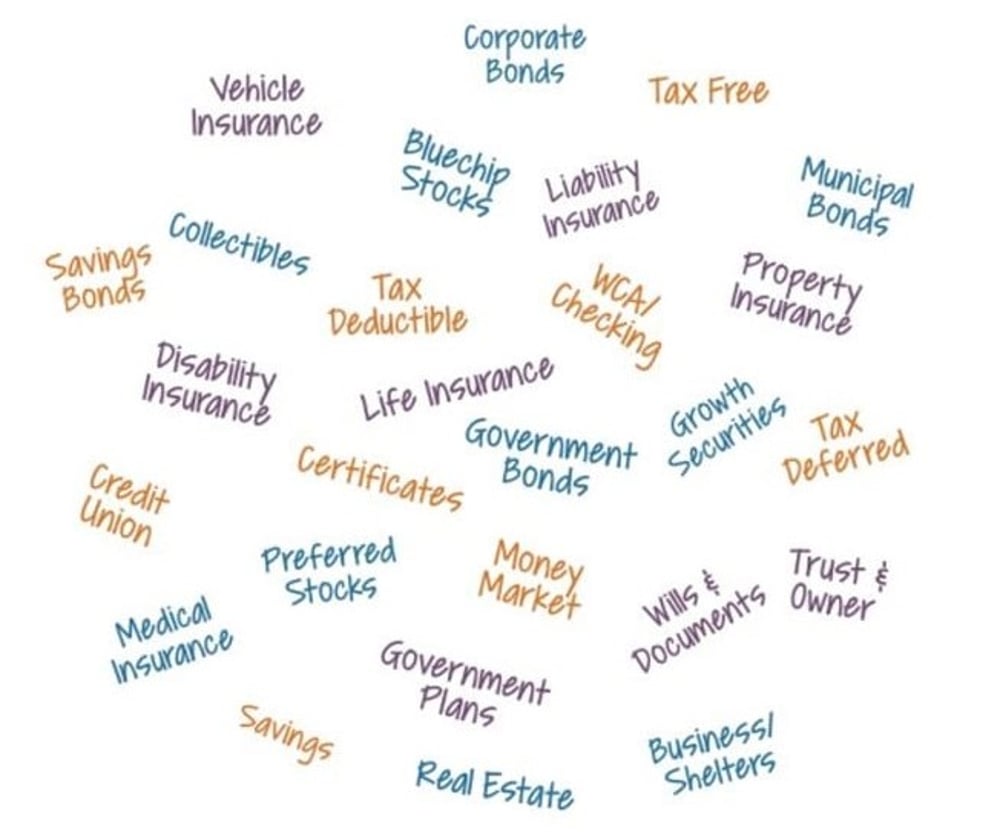
The picture most people's finances represent is uncoordinated decisions, purchased on opinion, limited to immediate needs, and made one at a time with no connection to an overall strategy. Every purchase is a standalone event. Every decision is disconnected from the next. And the result, year after year, is that the gap between where you are and where you want to be never closes.

That is what these classes change. We give you the financial model - the framework that connects every decision, explains every product, and shows you how money actually moves. Once you have the model, everything becomes clearer. Debt stops being normal. Budgeting stops feeling like punishment. Investing stops being intimidating. And freedom - real financial freedom - starts looking like something that's actually possible for you.

These classes were built around the same knowledge that the wealthy have always had access to - the concepts banks understand, the tax strategies corporations use, the wealth-building tools that were never marketed to working families. That changes here. Whether you're starting from zero or building on a foundation you've already laid, this curriculum meets you where you are and takes you further than you thought possible.

Start Learning Today β†’ Talk to an Advisor First
Online Classes
Learn at your own pace Β· Available now Β· Any device
  • βœ“16-module Introduction to Financial Literacy
  • βœ“Advanced Financial Literacy module
  • βœ“Debt management deep-dive
  • βœ“Credit score building & maintenance
  • βœ“Budgeting systems that actually work
  • βœ“The three buckets of money explained
  • βœ“Compounding vs amortizing - understand both
  • βœ“Five ways to make better financial decisions
  • βœ“Access from any device, any time
Enroll in Financial Literacy Classes

Questions first? Book a free consultation β†’

Full Curriculum

Everything Covered. Nothing Hidden.

Two full modules - 20 lessons total - covering every dimension of personal finance in plain language. From your first lesson on what to expect, to advanced debt management and credit building strategies. Each module builds on the last so the knowledge compounds as you go.

πŸ“˜ Module 1 - Introduction to Financial Literacy (16 Lessons)
01
What to Expect From the Course
How this curriculum is structured and what changes when you understand money at a foundational level.
02
The Five L's and Two C's
The core framework that governs how money moves through your life - and how to use it to your advantage.
03
Focusing Your Energy
Why scattered financial decisions lead to no progress - and how to focus your resources on what actually moves the needle.
04
How Do You Feel About Debt?
Uncovering the emotional relationship most people have with debt - and replacing it with a strategic one.
05
ROI vs ROI
The two types of return on investment - financial and personal - and why ignoring either one costs you.
06
The Economy, Congress & Taxes
How government policy, tax law, and economic cycles directly impact your personal finances - and what you can do about it.
07
Three Buckets of Money
Taxable, tax-deferred, and tax-free accounts - why most people have everything in one bucket and what it costs them.
08
Family Banking Concept
How to build a banking system within your own family structure that builds wealth instead of feeding the bank.
09
Designs Matter & Your Life Is Not Priceless
How to calculate what your life is actually worth financially - and why this number changes every decision you make about insurance.
10
Three Types of Spenders
Which spending personality are you - and how does it shape your financial trajectory without you realizing it?
11
Compounding vs Amortizing
Compounding builds wealth. Amortizing destroys it. Understanding both is the most important financial concept most people never learn.
12
Accumulation vs Utilization
Building a number is only half the job. Knowing how to access your wealth without triggering massive tax events is the other half.
13
Three Types of Wealth
Financial, personal, and legacy wealth - and why building only one of the three leaves you incomplete regardless of your account balance.
14
"Or" vs "And" Assets
The difference between assets that give you one benefit or another - and assets that give you multiple benefits simultaneously.
15
The 50-30-20 Rule
The most practical budgeting framework available - explained in a way that actually works for real incomes in the real world.
16
Five Ways to Make Financial Decisions
A decision-making framework that replaces impulse and opinion with strategy - for every financial choice, large or small.
πŸ“— Module 2 - Advanced Financial Literacy (4 Lessons)
01
Your Budgeting and Expenses
Build a real budget that accounts for every dollar - one you'll actually maintain because it's built around your life, not a generic template.
02
Building Your Financial Safety Net
How to build an emergency fund strategically - how much you actually need, where to keep it, and how to fund it without disrupting your other goals.
03
Debt Management: Navigating the Modern Financial Maze
A systematic approach to eliminating debt - which debts to attack first, how to accelerate payoff, and how to stop accumulating new debt permanently.
04
Your Credit Score: Building and Maintaining It
Exactly how your credit score is calculated, what damages it most, and the specific actions that build it faster than any credit repair service ever could.
What You'll Walk Away With

Not Just Knowledge - Control

These classes don't just fill your head with facts. They change the way you see every financial decision you'll make for the rest of your life. You'll finish with a framework that works whether you're buying a car, planning for retirement, managing debt, or building a business.

πŸ—ΊοΈ
A Financial Model That Works for Your Life

You'll have a framework - not a generic template - that you can apply to every financial decision you face from this point forward. No more making it up as you go. No more buying on opinion or convenience. You'll have a model, and every decision will fit inside it.

🧾
Clarity on Debt - What It Costs and How to End It

Most people know they have debt. Few understand how much it's actually costing them - in interest paid over the life of a loan, in opportunity cost, in the compounding effect of money that could have been invested instead. This changes that. You'll see exactly what debt costs, and you'll have a strategy to eliminate it systematically.

πŸ“Š
The Three Buckets - and How to Use All of Them

Taxable, tax-deferred, and tax-free. Most people have all their money in one bucket - usually the worst one for long-term wealth. Understanding how to distribute across all three buckets is one of the most powerful and least-known wealth-building moves available to working families. You'll understand exactly how to do it.

πŸ›‘οΈ
A Budget You'll Actually Keep

Not because it's restrictive - but because it's logical. The 50-30-20 rule explained in a way that fits real incomes, real expenses, and real life. When you understand the why behind the budget, you stop fighting it and start using it as the tool it was always meant to be.

πŸ“ˆ
The Accumulation vs Utilization Distinction

Building a retirement number is only half the equation. The other half - how you access that money, in what order, from which accounts, with what tax consequences - is what determines whether you actually keep it. Most financial education stops at accumulation. This course takes you all the way through utilization.

πŸ”
A Credit Score Strategy That Actually Works

Your credit score affects your mortgage interest rate, your car payment, your insurance premiums, and in some cases your employment. We teach you exactly how it's calculated - the five factors, their weightings, and the specific actions that improve each one. No credit repair gimmicks. Just the actual mechanics, explained plainly.

The Transformation

What Changes When You Have the Model

Financial literacy is not just information. It is a lens that changes how you see every financial decision for the rest of your life. Here is what that shift looks like in practice.

Before the Education
βœ—

Making financial decisions one at a time with no connection to an overall strategy - buying insurance because a friend sold it, opening a 401(k) because HR offered it, taking on debt because it was convenient

βœ—

Paying the minimum on credit cards without understanding how amortization means the bank collects most of its interest in the first few years

βœ—

Saving what is left over after spending - which is usually nothing - instead of paying yourself first as a non-negotiable line item

βœ—

Having all retirement savings in one tax bucket - tax-deferred - without realizing you are accumulating a large future tax liability that could significantly reduce your effective retirement income

βœ—

Living without an emergency fund and being one unexpected expense away from financial crisis - using credit cards to cover what should have been covered by savings

After the Education
βœ“

Every financial decision connects to the same overarching strategy - each product, each account, each insurance policy chosen because it serves a specific role in a coordinated plan designed around your goals

βœ“

Using the debt avalanche or debt snowball method strategically to eliminate high-interest debt in the most efficient sequence - understanding exactly what each payment does to your outstanding balance

βœ“

Automating savings to come out before spending decisions - treating your future self like a bill that gets paid first every month regardless of what else is happening

βœ“

Deliberately building across all three tax buckets - taxable, tax-deferred, and tax-free - so that in retirement you have multiple income sources with different tax treatment, giving you maximum flexibility and minimum tax exposure

βœ“

A 3-6 month emergency fund in a liquid, accessible account - maintained as a permanent fixture in your financial life so that unexpected expenses are an inconvenience, not a financial crisis

The Bigger Picture

Financial Education Is Not a Product. It's a Foundation.

Most financial advice is designed to sell you something. The 401(k) maximization advice sells the mutual fund. The insurance recommendation sells the policy. The mortgage refinance tip sells the loan. Underneath all of it, someone is collecting a commission - and the advice is shaped around that transaction, not around your best interest.

These classes are different. They start with education - the kind that makes you a smarter consumer of every financial product you'll ever encounter. When you understand how money works, you stop being sold to and start making decisions. That shift changes everything.

This is also why Dwalyn built these classes to complement - not replace - a personalized financial plan. The education gives you the foundation. The consultation gives you the strategy. Together, they give you the complete picture that most people never get.

Talk to an Advisor After Your Classes β†’
Financial Freedom and Your Decisions

"Increasing your financial literacy and maximizing your financial potential starts with closing the gap of financial knowledge. Finances can be confusing - and without a financial model, financial independence cannot happen."

β€” DWAYNE E. DASHER

For Veterans & Active Military

The Military Teaches You Discipline. It Doesn't Teach You This.

Ask any veteran what the military taught them and you'll hear the same themes: sacrifice, discipline, mission focus, resilience, the ability to operate under pressure with incomplete information. These are extraordinary qualities. They are also, almost perfectly, the qualities that produce excellent investors, strategic planners, and long-term wealth builders.

The one thing the military systematically fails to teach - and in many cases actively works against - is personal financial literacy. Active duty service members are among the most targeted groups for predatory payday lenders operating near military bases. They receive BAH, BAS, and other allowances without any instruction on how to invest them. The Thrift Savings Plan is offered but rarely explained. The Blended Retirement System was introduced in 2018 but most servicemembers don't fully understand how it works or how to maximize it.

When separation comes - whether after 4 years or 24 - the financial decisions arrive all at once. TSP rollover or not? What replaces SGLI? How does the pension interact with a civilian salary? What does a VA disability rating mean for your taxes? These are not simple questions. They are consequential ones. And for most transitioning veterans, there has been no preparation for any of them.

These financial literacy classes are built for people who bring the discipline and just need the knowledge. If you wore a uniform - or you're still wearing one - this curriculum will give you the financial framework you deserved from the beginning. The concepts in these courses apply to every financial decision you'll face in your military career, during transition, and in civilian life afterward.

Start the Curriculum β†’
What These Classes Address for Veterans
β†’
Why your BAH and BAS aren't being maximized

Most servicemembers treat their allowances as spending money. They are investment capital. Understanding the three buckets of money changes how you think about every allowance you receive.

β†’
How compounding works in the TSP - and how to use it

The TSP is one of the lowest-cost retirement vehicles in existence. Most of the people contributing to it don't understand fund allocation, the lifecycle funds, or when to consider alternatives. Module 11 (Compounding vs. Amortizing) directly addresses this.

β†’
Life insurance decisions before and after separation

Module 9 (Your Life Is Not Priceless) teaches you how to calculate your actual life insurance need - a calculation that changes completely when you separate and SGLI ends. Understanding this before the 120-day window closes saves you from expensive mistakes.

β†’
Building an emergency fund on a military salary

PCS moves, deployments, and family separations create irregular expenses that civilian financial advice doesn't account for. Module 2 of the Advanced curriculum builds a safety net framework that actually fits military life.

β†’
Credit score management during and after active duty

Frequent relocations, deployment-related financial disruptions, and the allure of on-base retailers offering easy credit are a perfect recipe for credit score damage. Module 4 of the Advanced curriculum gives you the exact repair and maintenance strategy.

The Education Starts Here.

Every financial decision you've made without this knowledge has cost you something. That cost compounds every year you wait. The best time to start was a decade ago. The second best time is right now.